Takahē

Lost for 50 years and presumed extinct, takahē were miraculously rediscovered in a remote Fiordland valley in 1948. Today, their numbers are slowly growing and these remarkable flightless birds are returning to the wild, including here on Rotoroa Island, where we have three breeding pairs.

What They Look Like

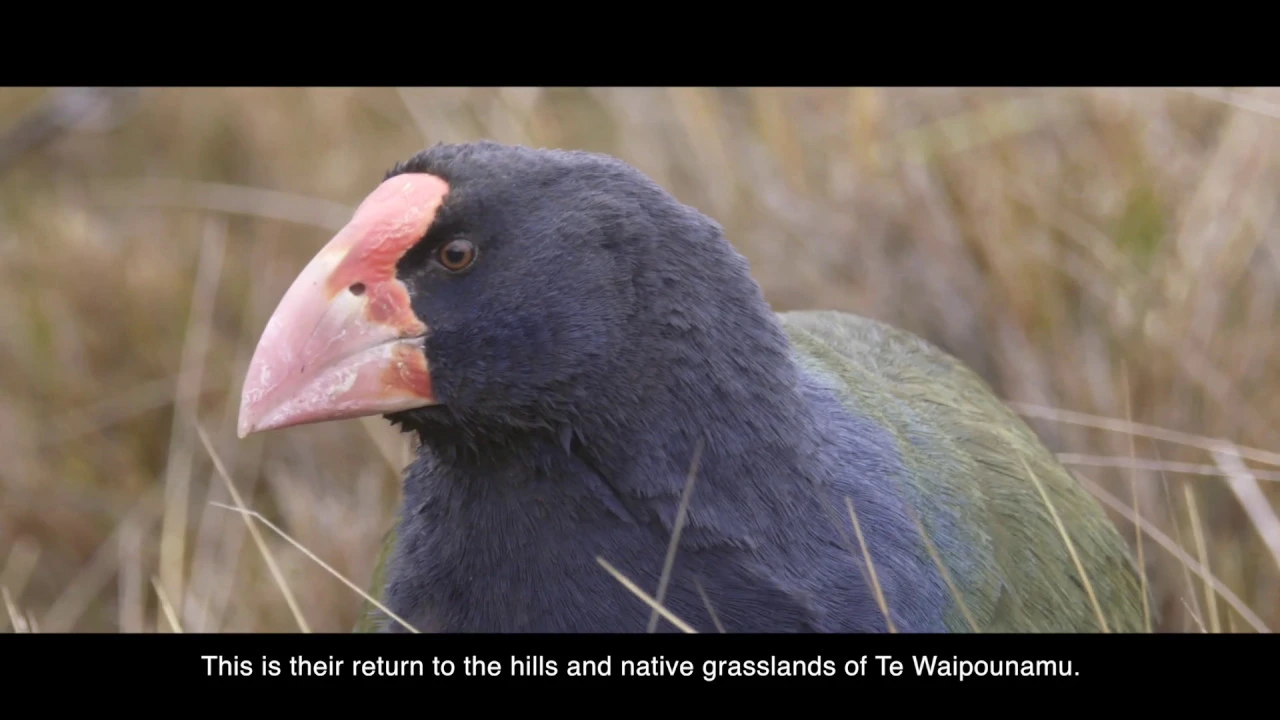
Takahē are one of Aotearoa’s most striking manu — large, flightless, and unmistakable on the tracks. Standing up to 50cm tall and weighing around 3kg, their deep blue and green plumage catches the light as they move through the grasslands. Not to be confused with the more common pūkeko, takahē are stockier birds with a heavier build and a slower, deliberate way of moving. Their bright red beak and sturdy legs help them strip back shoots to reach fresh growth, and their low, resonant “clowp” can often be heard carrying across the island.

How They Live

Takahē spend nearly all day feeding, using their specialized beaks to strip seeds from grass and eat new shoots. They lay one to three eggs each October, with both parents sharing the 30-day incubation and caring for chicks for three months. Young birds often stay with their parents for up to 18 months. Despite their size and strength, their flightlessness makes them vulnerable to introduced predators.

A Conservation Success Story

Once thought extinct for 50 years, takahē are now making a remarkable comeback. With a population of just over 500 birds, they're classified as "nationally vulnerable" but growing. Rotoroa Island is one of several safe sites where DOC's Takahē Recovery Programme is establishing breeding pairs away from predators like stoats. Our birds come from the Burwood Takahē Breeding Centre and are guardianship of Ngai Tahu, Ngai Tai, and Ngāti Paoa.

When You Visit

Please keep a reasonable distance and let takahē find their own food. Your respect helps us protect these remarkable birds.

Learn more at www.takaherecovery.org.nz

Watch: Takahē Return to the Wild